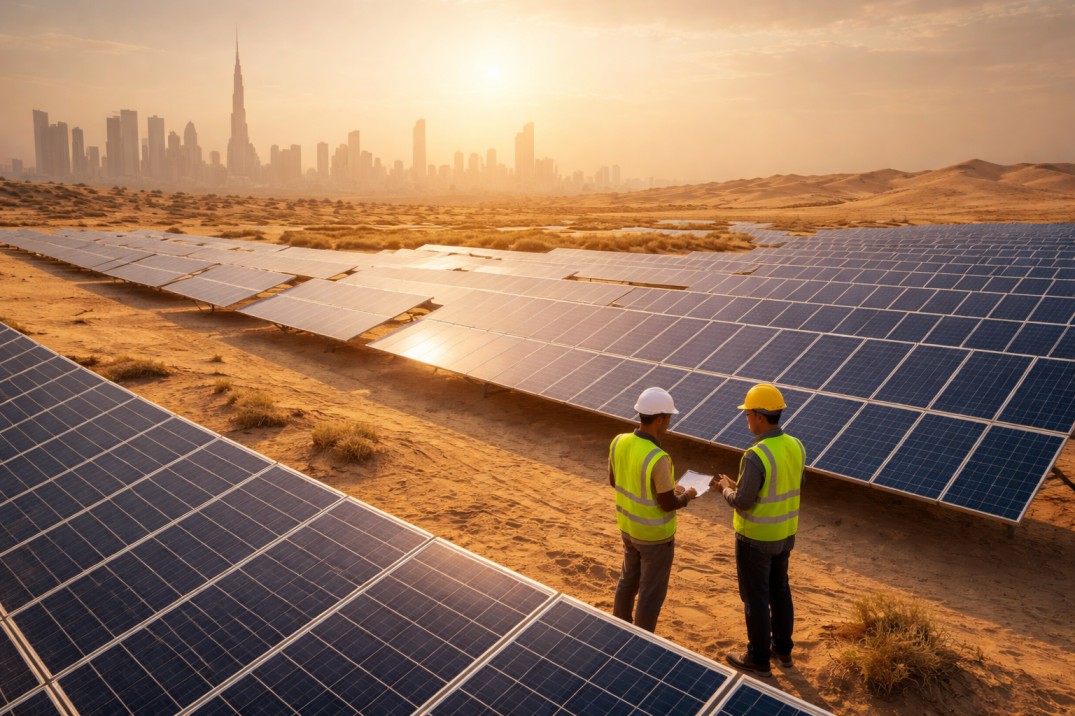
The Middle East has plenty of sun, but the real challenge isn’t generation, it’s storage that survives the desert. As solar projects expand across Saudi, UAE, and Jordan, weak batteries won’t cut it. That’s why tough, heat-ready Indian gel batteries are stepping in to deliver truly reliable solar power. In this blog, let’s break down how gel batteries for solar are powering the Middle East’s renewable energy boom.
Deserts, Demand, and a Critical Gap
The Middle East has never lacked sunlight. But for years, turning that sunshine into something stable, something you can actually count on when the sun goes down has been the real challenge.
Solar generation? That’s the easy part. Storage? That’s where things fall apart if you don’t get it right.
You can’t build an energy revolution on batteries that buckle under pressure. That’s why developers across Saudi, UAE, and Jordan are rethinking the storage equation. And this is where gel batteries for solar, made in India and built for heat, come in strong.
Why Gel Batteries? And Why Now?
Gel batteries, unlike the flooded lead-acid types, use a silica-based gel that locks the electrolyte in place. No spilling. No drying out. No surprise failures when the mercury hits 50°C.
Extron’s approach adds a few key enhancements:
- Thermal stability that doesn’t flinch in desert heat.
- Zero-maintenance design that field techs love (because it saves time).
- Longer lifecycle you’re not swapping them out every few years.
They don’t need babysitting. They just work.
What Makes Indian Batteries a Good Fit for the Middle East?
Ironically, it’s because they’ve been stress-tested back home. India’s grid instability, and intense summers, forced manufacturers to innovate. So, what you get is a gel battery for solar that’s already been made robust.
Middle Eastern solar developers are seeing it firsthand. Install an Extron battery, and you get:
- Reliable discharge, even after hundreds (or thousands) of cycles.
- Consistent performance under long-duration sunlight and night operations
- A power solution that doesn’t die halfway through a project’s lifecycle
That’s not marketing fluff. That’s hard data from actual installations.
Where They’re Working Real Deployments, Real Wins
Let’s move beyond hypotheticals. Extron’s batteries are currently deployed in:
- Rural electrification sites in Jordan
- Telecom solar towers in remote Saudi zones
- Commercial rooftops across the UAE.
- Large solar farms feed local grids
Every project shares one common goal: performance without excuses. And Extron delivers.
Beyond Performance: Cost Matters Too
Sure, performance is king. But Extron’s gel batteries also reduce the total cost of ownership. Fewer replacements, minimal maintenance, and longer operational life? That adds up fast. Especially in large-scale solar where margins matter.
Small Package, Massive Impact
Let’s call it what it is: a quiet revolution. Extron isn’t chasing attention. They’re building power solutions that last. And right now, their gel batteries for solar are powering more than just buildings, they’re powering confidence.
From sun-baked deserts to remote energy grids, Indian innovation is holding the line. And if the Middle East’s solar future is going to stay bright? It needs batteries that don’t break. Extron’s already ahead of the curve.
FAQs – Let’s Clear the Air
Q1: Can I use Extron solar gel batteries for commercial or utility-scale solar?
Absolutely. They’re already in use in large-scale solar farms and industrial rooftops.
Q2: What makes gel solar batteries different from flooded lead-acid batteries?
They’re sealed, maintenance-free, and handle deep discharges much more efficiently.
Q3: Why Extron solar batteries?
Because they are built in a country with similar climate challenges and proven reliability in real-world projects.